What the Camera Catches
Contractor AI adoption doubled in a single year. On the jobsite, that mostly means one thing — a camera watching the work. Here is what it actually catches, and what it still cannot.
Carl Brazley, CEO
The share of contractors using AI for estimating, scheduling, and bid management jumped from 17 percent in 2025 to 38 percent in 2026 — the largest single-year move in construction-technology data. That is not a pilot anymore. That is the field deciding, in one year, that this is real.
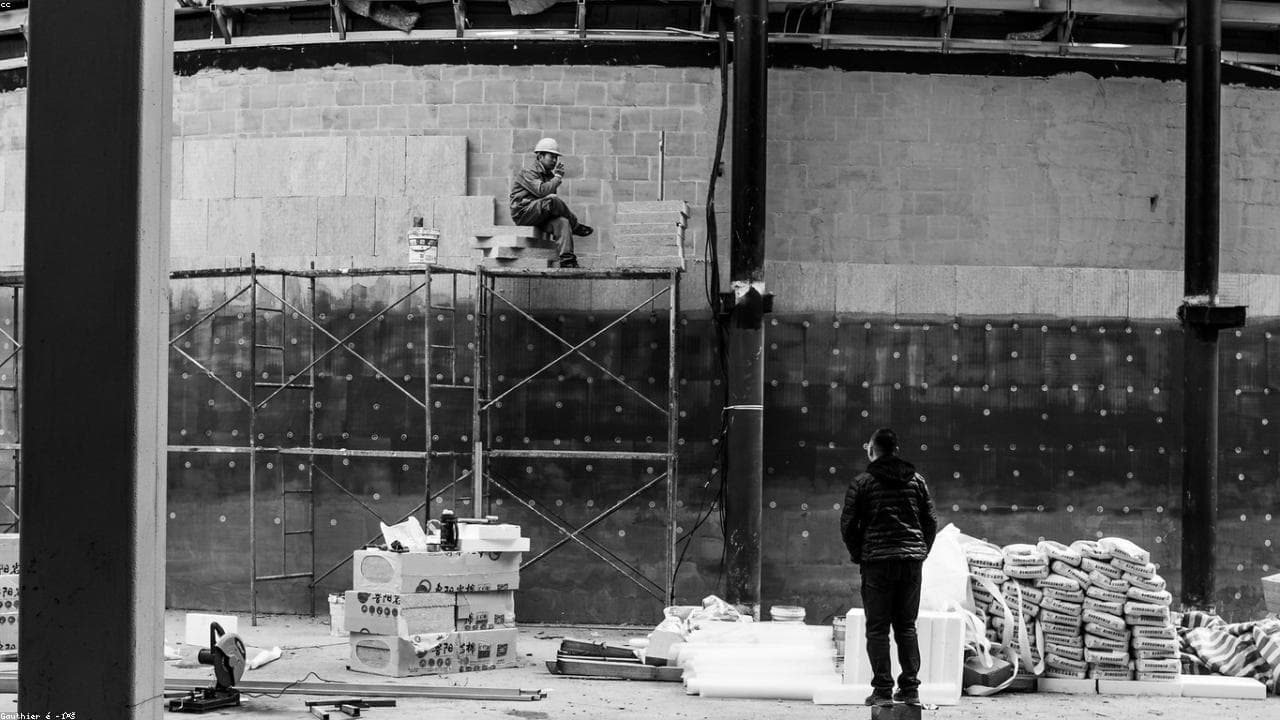
On the jobsite, the headline use is computer vision: a camera trained to flag missing PPE, workers too close to equipment, unauthorized entry into a hot zone, and to raise the alert before something happens rather than after. Firms running it, alongside AI scheduling and predictive equipment maintenance, are reporting safety-incident reductions north of 40 percent. That number is worth taking seriously.
Where it earns its place
The honest case for jobsite computer vision is not that it replaces a good superintendent. It is that it never gets tired. A super notices the unclipped harness when they are standing there and looking. The camera is standing there and looking for all ten hours, on every camera, without a lapse of attention in hour nine. That is a real complement to human judgment, not a substitute for it.
“The camera does not replace a good superintendent. It just never blinks in hour nine.”
Estimating is the other place the tools are landing hard. Automated systems are hitting 85 to 90 percent accuracy against a manually prepared estimate and compressing a half-day of takeoff into minutes. We read that carefully: 85 to 90 percent is excellent for a first pass and dangerous as a final number. The value is speed on the draft, which frees an estimator to spend judgment where judgment actually matters — the 10 to 15 percent the model gets wrong, which is usually the part that decides the job.
What it still cannot do
Here is the tension worth naming. A model trained on ten thousand jobsites is very good at the situations that resemble ten thousand jobsites. Real projects generate the situation that resembles none of them — the odd site constraint, the funding rule that reshapes the sequence, the client who does not decide the way the model assumes clients decide. That is exactly the ground where the money is won or lost, and it is exactly where the tools are weakest.
So we use them the way we would use a sharp, fast, literal-minded new hire: for the volume work, the first pass, the tireless watch. And we keep the judgment calls — the interpretation, the exceptions, the read on the room — with the people whose names are on the job. The firms that get this balance wrong will not be the ones who adopted AI. They will be the ones who mistook a 90 percent answer for a finished one.
About the author
Carl Brazley — CEO