Does the Digital Divide?
Technology, Economic Opportunity, and the Future We Are Building
Carl Brazley, CEO · Edited by Jules Whitfield
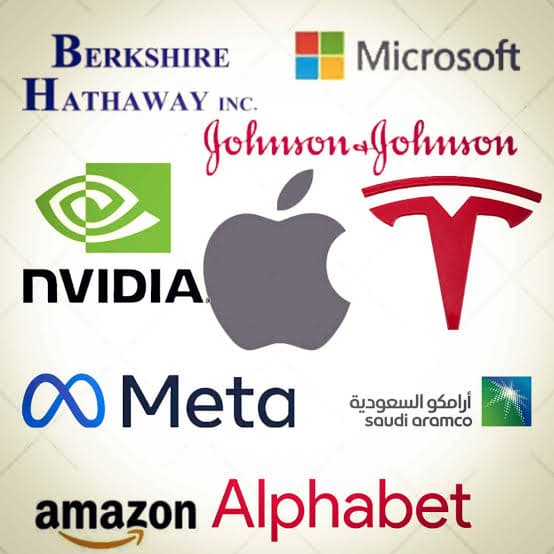
Few forces have transformed modern life as profoundly as digital technology. Three companies—Nvidia, Apple, and Microsoft—offer a useful lens through which to examine that transformation. Nvidia's computing platforms help power artificial intelligence. Apple's iPhone has reshaped communication and access to services. Microsoft's Windows, productivity software, and cloud platforms have become foundational to modern business and institutions.
Their success represents more than corporate achievement. It illustrates how technology can reshape economies, industries, and everyday life. But it also raises a larger question: How should we measure the value of innovation—not only by what it produces, but by how its benefits and costs are distributed?
Two Sides of the Same Transformation
For investors, entrepreneurs, and businesses positioned to adopt new technologies, the digital revolution has created extraordinary opportunities. New industries have emerged, productivity has improved, and capabilities once reserved for large organizations are increasingly accessible to individuals and small businesses.
But the experience is not uniform. Workers face changing job requirements and potential displacement. Small businesses may gain powerful tools while becoming dependent on platforms they do not control. Families with limited resources may struggle to afford reliable internet access or develop the skills needed to participate fully in an increasingly digital economy.
A January 2026 analysis by Pew Research Center, using 2025 survey data, found that 54% of U.S. adults in households earning less than $30,000 had home broadband subscriptions, compared with 94% of those earning $100,000 or more. Access remains unequal even as digital services become increasingly essential.
The Other Side of the Divide
Yet there is another side to this discussion. Technology also has the potential to level playing fields that have historically been uneven.
A small business can access marketing and analytical capabilities once available primarily to larger companies. Someone in an underserved community can access educational resources and professional training beyond their immediate geography. People with disabilities can gain greater independence through assistive technologies. An aspiring entrepreneur can develop an idea, reach customers, and compete without the traditional costs of building an entire business infrastructure.
Technology does not automatically create equal opportunity. Access, affordability, education, and the ability to use these tools effectively still matter. But it can remove barriers that once limited who could participate and succeed.
Planning for the Future
Innovation is neither inherently good nor bad. Its impact depends on how it is developed, who can access it, how it is deployed, and who benefits from the efficiencies and opportunities it creates.
There is an old saying that all money is not good money. A similar principle deserves consideration in the digital age: not every innovation should be judged a success simply because it is profitable, popular, or technically impressive.
For cities, states, and communities, the challenge is to look beyond adoption and ask whether technology solves meaningful problems, expands opportunity, improves services, and enhances quality of life.
The digital divide is about more than who owns a computer or has an internet connection. It is also about who has the resources and opportunity to benefit from the world technology is creating.
We should neither fear innovation nor embrace it blindly. We should understand it, prepare for it, and shape its direction. The measure of technological progress should not simply be how far it advances society, but how many people it enables to move forward.
About the author
Carl Brazley — CEO
Edited by Jules Whitfield